Repair services · the cold box
Sub-Zero Refrigerator Repair for Ortega’s Historic Kitchens
When a refrigerator that has hummed along since the eighties starts drifting warm, the worst thing anyone can do is guess. We measure first, then quote.
A Sub-Zero® refrigerator that drifts warm in Ortega is usually a thermistor, an evaporator fan, or a dirty condenser — not a lost cause. We diagnose at the machine, quote a firm figure, and most refrigerator repairs across Avondale and Riverside land between $550 and $1,100.
For vintage Sub-Zero repair in Ortega, Avondale, and Riverside, call the shop at (904) 893-3248 or Book online .
Sub-Zero Repair Ortega runs a diagnosis-first refrigerator service for Ortega and the 32210 ZIP — reach the bench directly at (904) 893-3248 Tuesday through Saturday, or arrange a visit through our online booking page.
Updated June 13, 2026.
(904) 893-3248 · Tue–Sat · 8:00 am–6:00 pm · you reach the bench, not a call center
Why does a Sub-Zero run warm while everything else seems fine?
Because on most of the machines we service, nothing else has to be wrong. The classic over-unders and bottom-mounts cool the refrigerator and freezer separately, so a warm fresh-food box with a frozen-solid freezer narrows the search immediately. We start where the evidence usually is: a condenser coil packed with the dust and pet hair that riverfront houses produce in quantity — Sub-Zero itself calls for cleaning every six to twelve months — then a drifting thermistor, then a quiet evaporator fan.
Only after those check out do we open the sealed system as a suspect. On a 561, a fresh-food side that cools but never quite arrives is the classic opening note of the 561’s well-known evaporator leak, and a unit that simply never cycles off deserves the longer reading in our note on a compressor that never shuts off. Either way, the gauges decide — not the calendar, and not a salesman.
| What you notice | First bench check | Cost lane |
|---|---|---|
| Fridge warm, freezer cold | Evaporator fan, then the frost pattern | $250–$1,100 |
| Both compartments slowly warming | Condenser coil and condenser fan | $250–$550 |
| Runs nonstop, never satisfied | Thermistor readings, then system pressures | $550–$2,000 |
| Lettuce freezing on the top shelf | Cold control calibration | $550–$1,100 |
| Display showing dashes or codes | Control board and EEPROM test | $550–$1,100 |
Service that respects the house around the machine
Most of our refrigerator calls come from blocks where the houses are pushing a hundred years old — the streets around the Florida Yacht Club, the riverfront runs off McGirts Boulevard, the galley kitchens of Avondale. The built-ins there often wear panel fronts cut to match original millwork, so we work in place wherever the fault allows, with floor protection down and hardware bagged and labeled.
Those same old houses carry old wiring, and Northeast Florida throws more than a hundred thunderstorm days a year at it. A board that scrambled the week after an outage is a pattern we see every summer, which is why our diagnosis always includes the electrical side — not just the cold side. The full roster of machines we keep parts for lives on the vintage Sub-Zero roster.
How a refrigerator visit runs, start to finish
- Phone triage. Describe the symptom and the model if you know it; we often tell owners over the phone when a visit is not worth their money.
- Airflow and condenser inspection. The grille comes off and the coil gets examined before anything electronic is blamed.
- Electrical readings. Thermistor resistance, fan operation, board behavior, compressor amp draw.
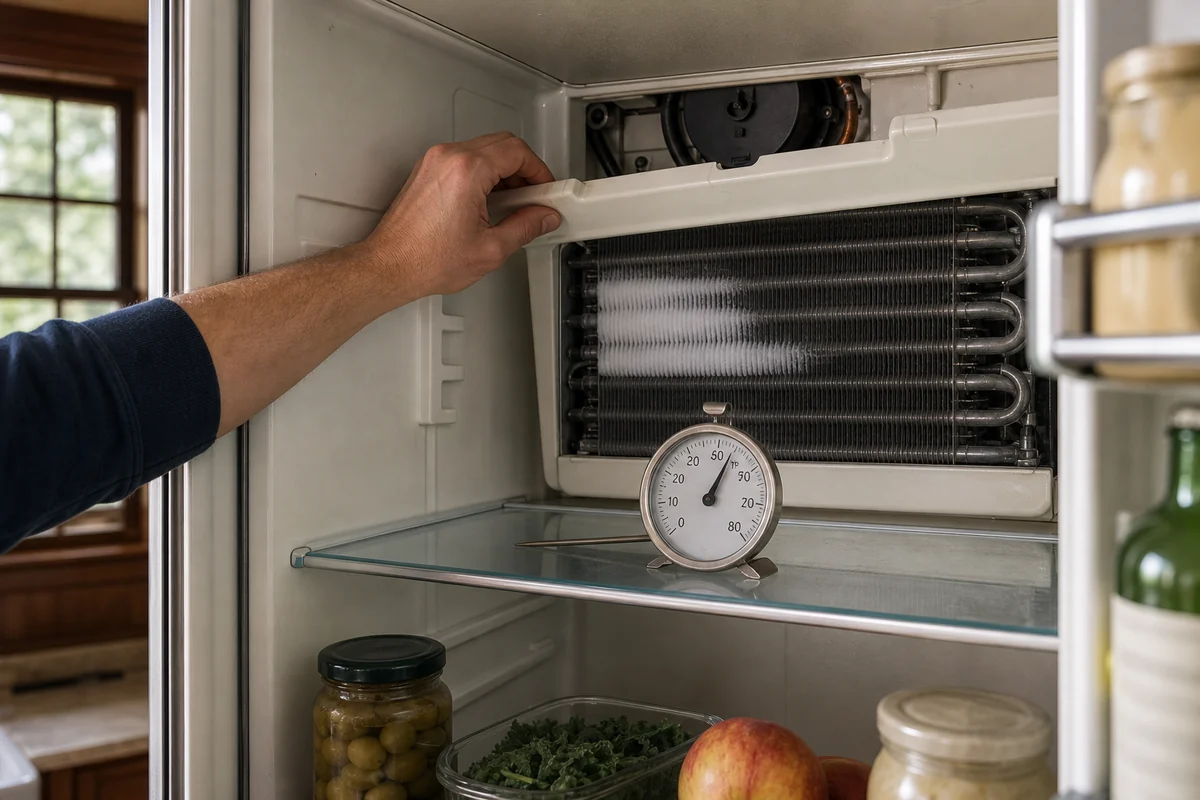
- Frost-pattern read. Panels off, evaporator examined — the single most honest witness in an old Sub-Zero.
- A firm written figure. You approve it, or we put the panels back and shake hands. No pressure either way.
The parts we replace most on a warm Sub-Zero
Across the 500 and 600 series, a warm refrigerator almost always traces to one of a handful of components. Knowing which fails — and why — is the difference between a same-visit fix and a wasted callback.
| Part | Why it fails here | Repair lane |
|---|---|---|
| Evaporator fan motor | Dried bushings after 20-plus years of run hours | $550–$1,100 |
| Thermistor (temp sensor) | Drift sends the board a false reading | $550–$1,100 |
| Cold control / mechanical thermostat | Contacts wear and lose calibration on 500 series | $550–$1,100 |
| Condenser fan motor | Seizes under riverfront dust and pet-hair load | $250–$550 |
| Defrost heater / thermostat | Lets the evaporator ice over and block airflow | $550–$1,100 |
Only when those test sound do we look past them to the sealed system, where a worn compressor or a leaking coil lives. The model file for the 600 series spells out how a failed thermistor can masquerade as a board fault on those electronic cabinets.
When to call now, and when it can wait until morning
Not every warm Sub-Zero is an emergency, and a few are. This is how we triage a call from Ortega or Avondale before we ever load the van.
| What is happening | Likely cause | Call now or wait? |
|---|---|---|
| Fridge warm, freezer still at 0°F | Evaporator fan or thermistor on the fresh-food side | Same-week slot is fine; move perishables to the freezer |
| Both compartments climbing fast | Condenser airflow, condenser fan, or compressor | Call now — the food clock is running |
| Warm right after a storm and outage | Restoration-surge damage to the control board | Call now; note the storm date when you reach us |
| Slightly warm, runs longer than it used to | Tired gasket or a coil due for cleaning | Wait for a scheduled visit; run the dollar-bill test first |
A seal that drags warm air in around the clock can mimic a cooling fault, so a gentle warm drift often resolves with fresh door gaskets rather than refrigeration work.
Owner questions about warm boxes
Why is my Sub-Zero refrigerator warm while the freezer still freezes?
On most classics the two compartments cool independently, so one warm side points at that side’s hardware: an evaporator fan that has stopped moving air, a thermistor reading wrong, or — on the 561 especially — a fridge-side evaporator leak. We pull the panel, read the frost pattern, and usually know within the hour.
How long does a refrigerator diagnosis take at the house?
Plan on forty-five minutes to an hour and a half. We inspect the condenser, take electrical readings from the thermistor and control board, and open panels to read the frost pattern. You get a firm written figure on the spot, and no work starts until you have approved it.
What temperature should the refrigerator side hold?
Thirty-eight degrees in the fresh-food compartment and zero in the freezer are the long-standing Sub-Zero set points. A unit also needs a full twenty-four hours to settle after a repair or a power loss, so we ask owners to judge a fix the next morning, not the next hour.
Do you service refrigerators hidden behind custom panel fronts?
Constantly — Avondale and Riverside are full of built-ins faced in millwork nobody could match today. We remove panels whole, label every piece of hardware, and rehang doors to their original reveal. Protecting the woodwork is half the reason owners call a vintage specialist instead of a generalist.
Which part fails most often on a Sub-Zero refrigerator that drifts warm?
The evaporator fan motor and the thermistors lead the list on the 500 and 600 series. A fan with dried bushings stops circulating cold air even though the compressor runs fine, and a thermistor that reads a few degrees off tells the board the box is colder than it is. Both are same-visit replacements once readings confirm them.
Should I throw out the food in a Sub-Zero that has been warm for a day?
Judge by the freezer, not the fridge. If the freezer held 0°F the frozen food is safe, but fresh items that sat above 40°F for more than two hours should go. Leave the doors closed until we arrive so the box does not climb further, and tell us how long it has been warm — it helps us prioritize the call.
Can a dirty condenser coil alone make a Sub-Zero run warm?
Yes, and it is the first thing we check. Riverfront houses near McGirts Boulevard feed coils a steady diet of dust, lint, and pet hair, and Sub-Zero calls for cleaning every six to twelve months. A choked coil cannot shed heat, so both compartments creep up together — a $250 to $550 cleaning often settles what looked like a major failure.
Bring us the machine everyone else gave up on.
The shop answers Tuesday through Saturday, eight to six. One visit, a straight diagnosis, and a firm number before any work begins.